St. Brigiden (Cologne)
A medieval parish church next to Groß St. Martin, demolished after 1802 – its ground plan is today traced in the paving.
St. Brigiden was a medieval parish church in the Rhine suburb, built directly against the basilica of Groß St. Martin. Its patron saint was Brigid of Kildare.
At a glance
- First recorded: 1172
- Demolished: after the secularisation of 1802
- Status: no longer exists
- Visible today: its ground plan, marked in the paving in front of and beside Groß St. Martin
A church in the ground
After the secularisation decree of 1802 St. Brigiden was auctioned off for demolition and gradually dismantled; Groß St. Martin took over its role as parish church. Its tower survived at first and served for decades as a stair to the organ. In 1900 excavations exposed the foundations. Today darker paving stones trace the outline of the vanished church – a quiet piece of city history right beside the Martin basilica.
Source: Wikipedia · retrieved 2026-06-23
Map
Blue dots: other places nearby — tap to explore.
In the news
- Loading news…
Headlines via Google News — links lead to the original source.
Sources & links
Auto-generated, last verified: 2026-06-23
You might also like
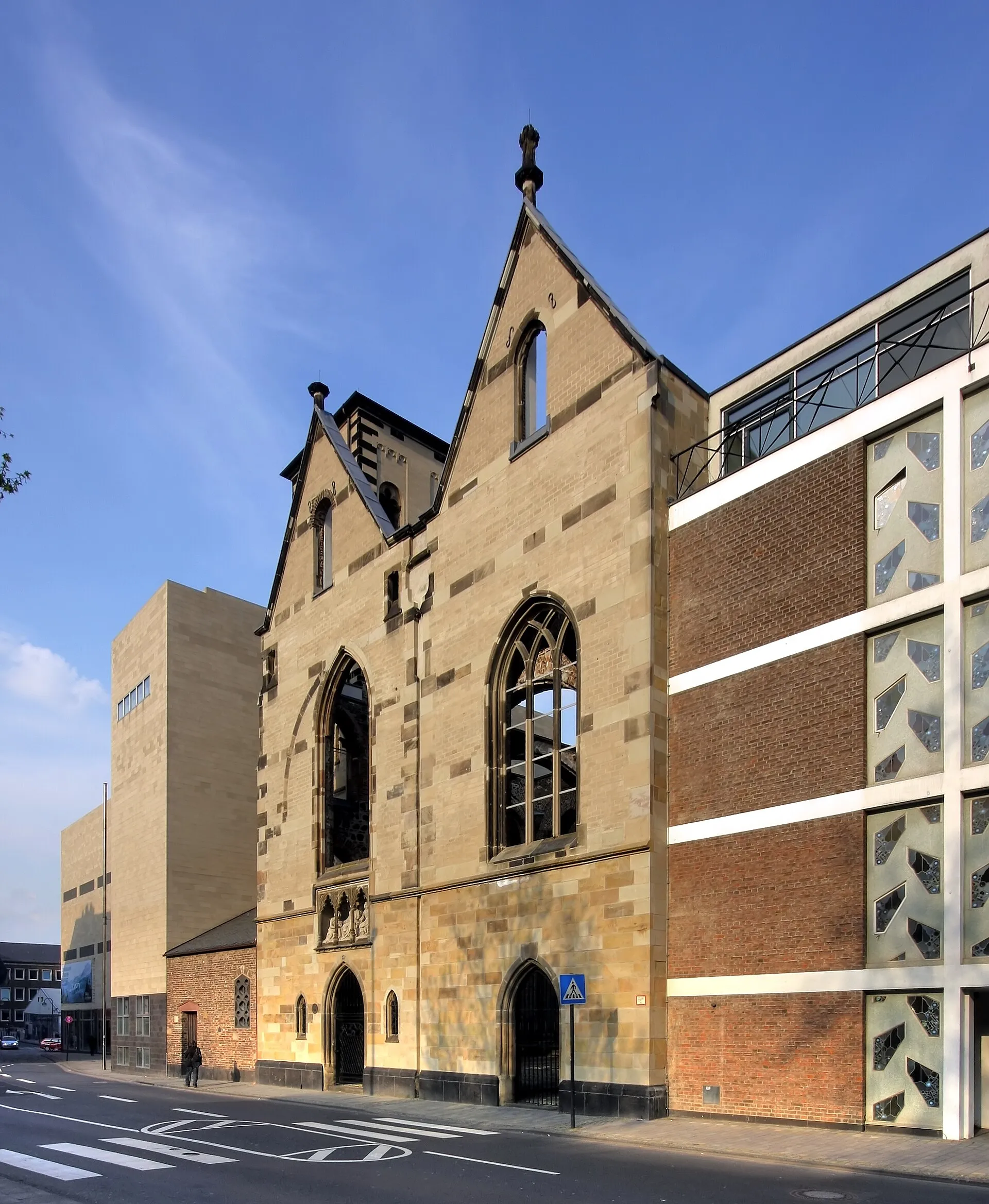
Alt St. Alban – Ruin and Memorial at Quatermarkt
The war ruin of one of Cologne's oldest Romanesque churches at the Quatermarkt – today a memorial with Kollwitz's ‘Grieving Parents'.
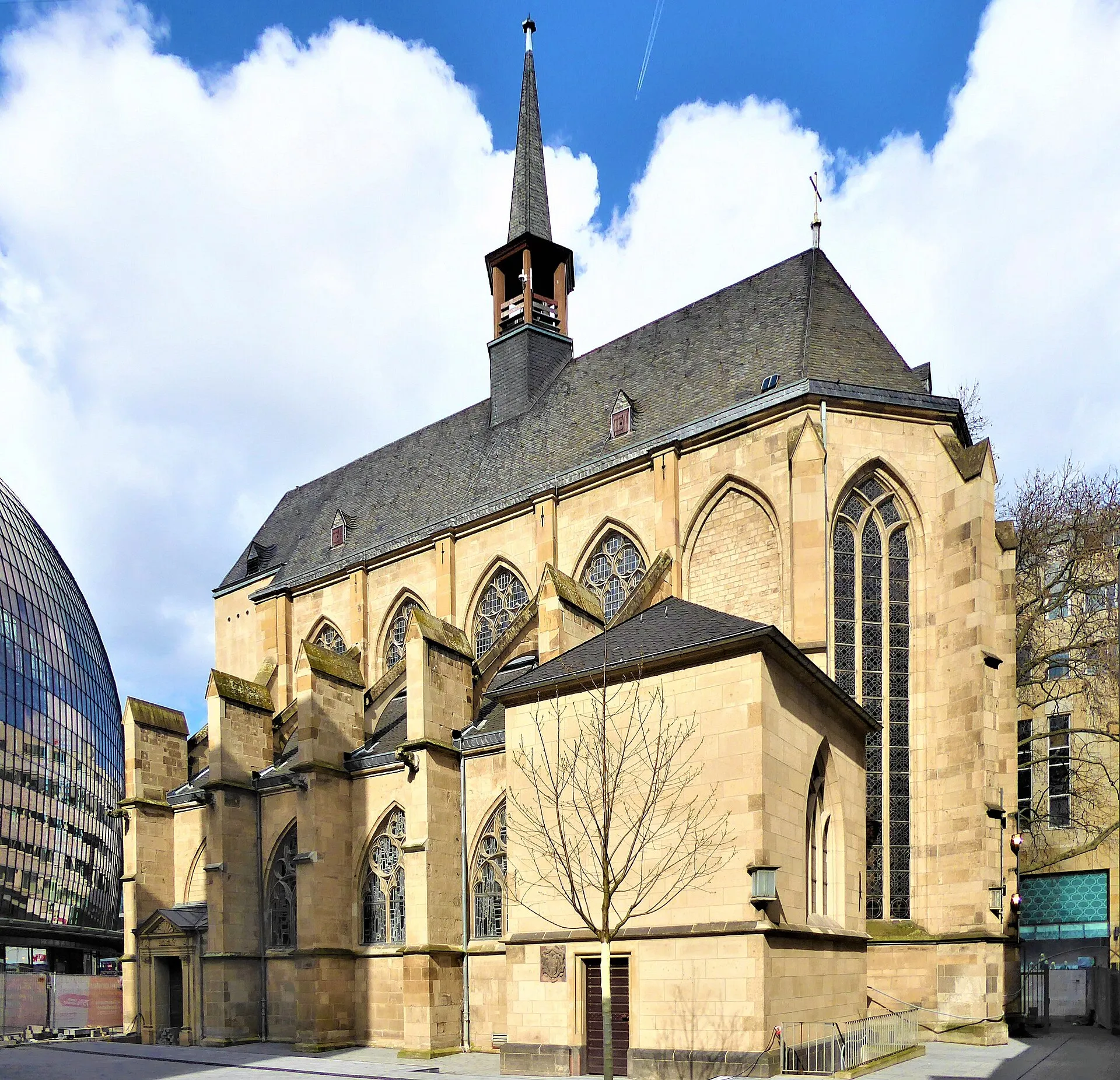
Antoniterkirche (Cologne)
A Gothic Protestant church in the middle of the Schildergasse – Cologne's most visited church after the cathedral, known for Barlach's ‘Hovering Angel'.
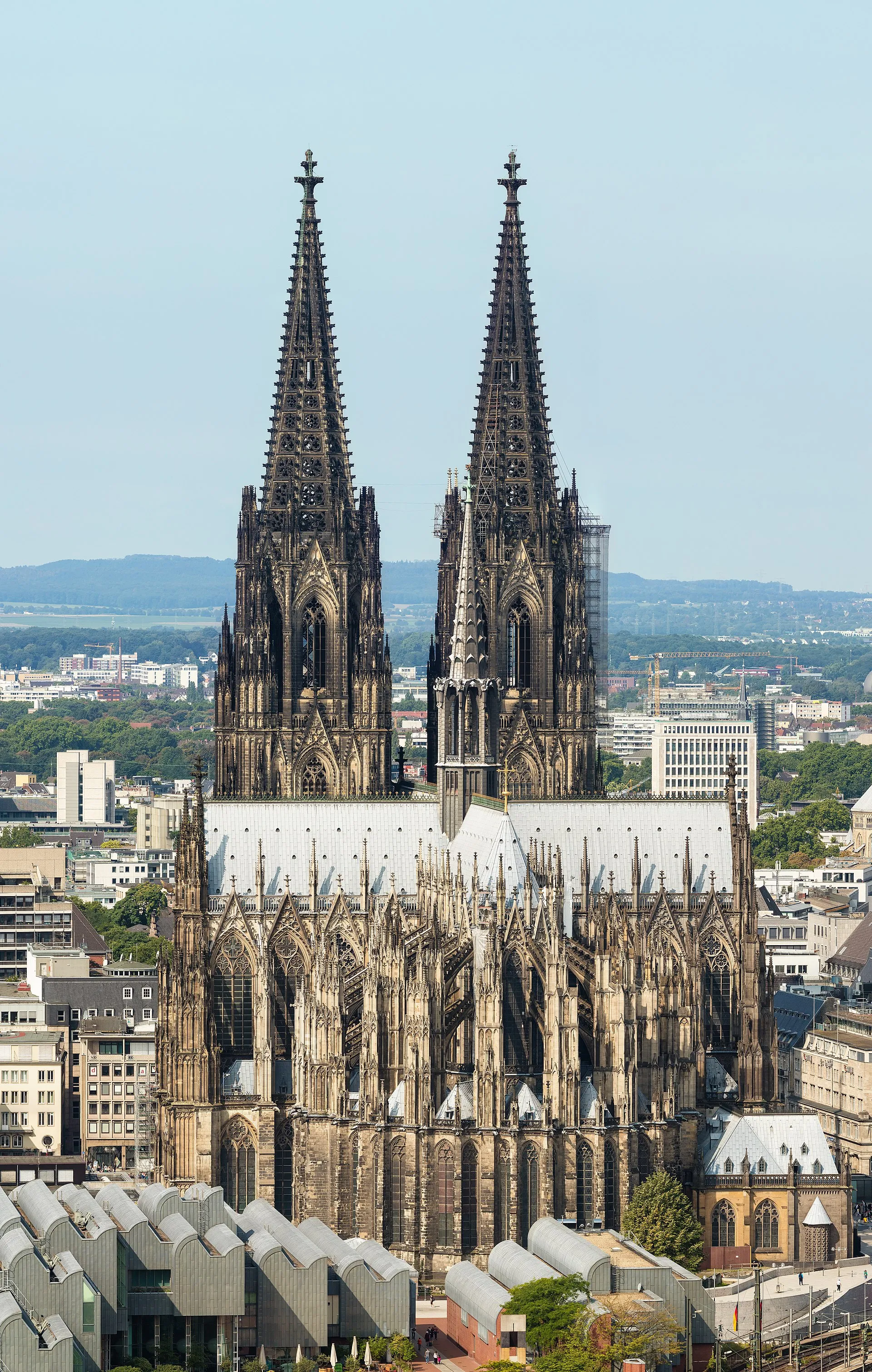
Cologne Cathedral
The Gothic cathedral of the Archdiocese of Cologne (157 m), begun in 1248 and completed in 1880 – a UNESCO World Heritage Site since 1996 and the city's landmark.
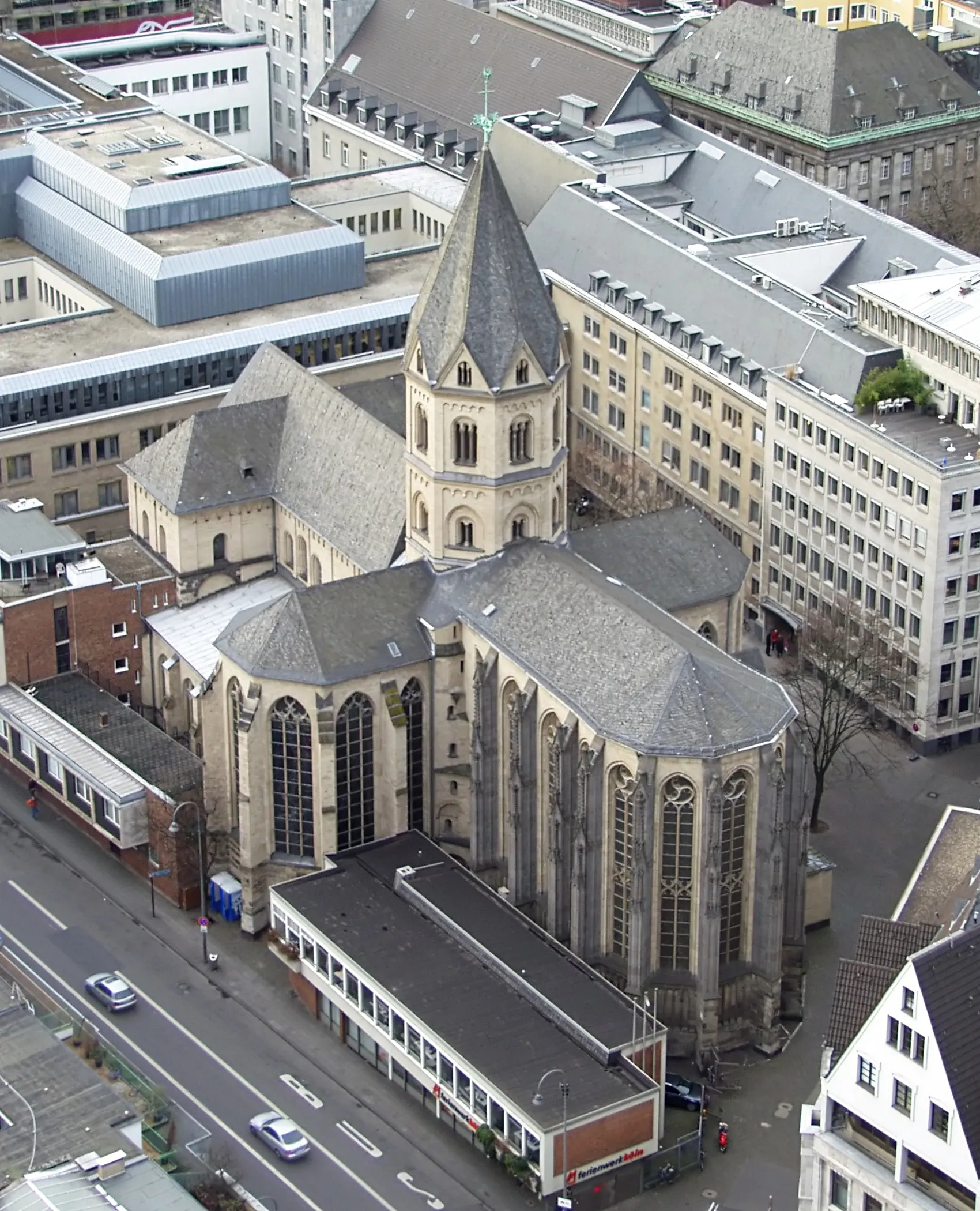
St. Andrew's Church, Cologne
A Romanesque-Gothic basilica near the cathedral – burial church of Albertus Magnus, with a colourful stained-glass cycle by Markus Lüpertz.
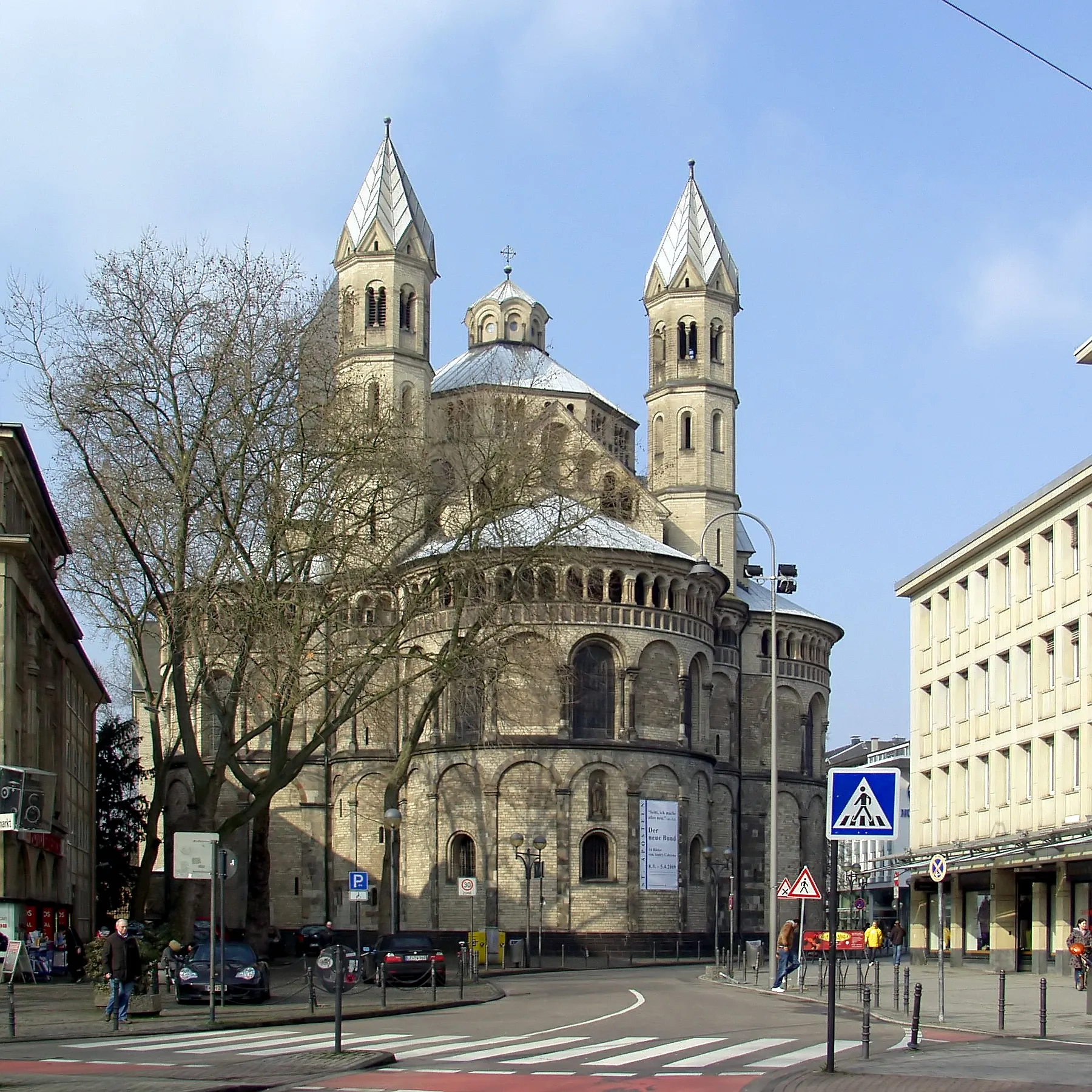
St. Aposteln
One of Cologne's twelve great Romanesque churches – with a magnificent trefoil choir on Neumarkt and a minor basilica since 1965.
Comments
- Loading comments…